Unit Conversion Logic: A Guide to the Metric System and Conversions
Selin Aydın · 23 Mayıs 2026
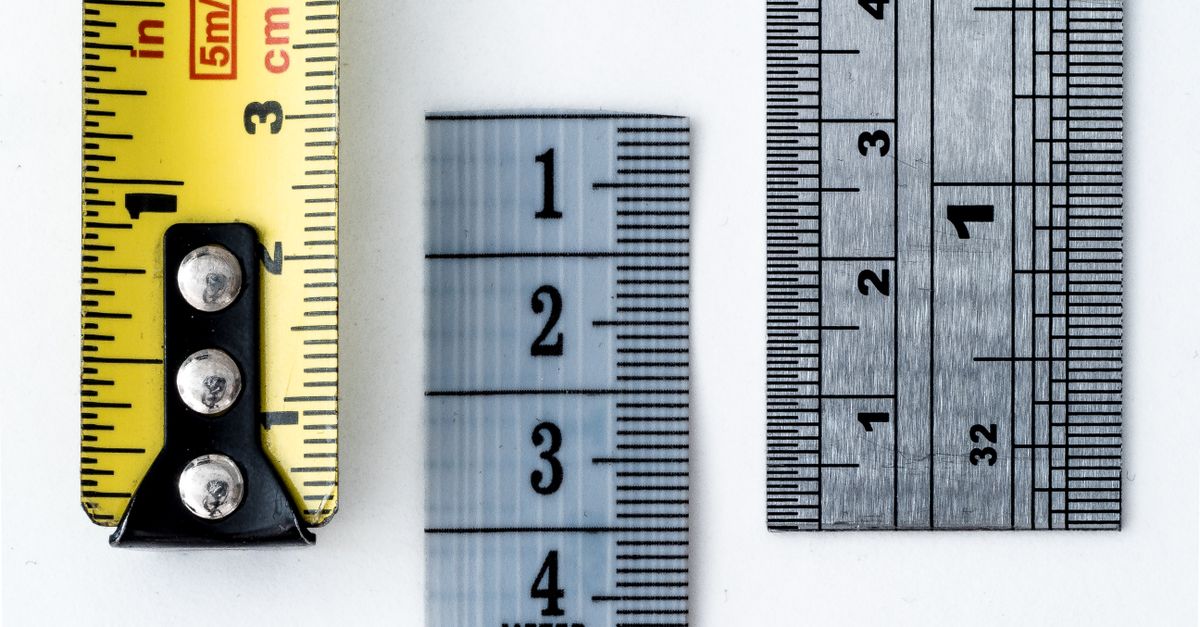
Whether we are trying to understand a measurement in a recipe, the dimensions of a product from abroad, or the temperature in a weather app, we all do the same thing: convert one unit into another. Unit conversion is the process of expressing a quantity in a different unit of measurement, and it becomes extremely easy once you grasp its logic. In this guide, we cover how the metric system works, commonly used conversions, and conversion methods with examples. For practical conversions, you can use our unit conversion tools.
Why Is the Metric System So Practical?
The metric system (the SI unit system) is the most widely used system of measurement in the world because it defines all measurements in terms of powers of 10. One meter is 100 centimeters, one kilometer is 1000 meters; the same logic applies to weight and volume as well. Thanks to this decimal structure, moving from one unit to another is often as simple as shifting the decimal point to the right or left. In non-metric systems (such as inches, feet, pounds), the factors are irregular, so conversion requires a bit more care.
The Basic Logic of Unit Conversion
Every unit conversion is based on a conversion factor. You multiply when converting a quantity to a smaller unit and divide when converting to a larger unit. For example, to convert meters to centimeters you multiply by 100 (2 m = 200 cm); to convert centimeters to meters you divide by 100. This simple rule applies to all families of measurement. What matters is choosing the correct factor and the direction of the operation; the rest is just a single multiplication or division.
Length Conversions
One of the most frequently encountered conversions in daily life is length. Switching between metric units is easy with the decimal system; the real need arises when converting between metric and imperial units:
- 1 inch = 2.54 cm
- 1 foot = 30.48 cm = 12 inches
- 1 meter ≈ 3.28 feet
- 1 mile ≈ 1.609 km
To convert a television's screen size from inches to centimeters you can use the inch to centimeter converter, and to convert a distance between feet and meters you can use the meter to feet converter.
Weight and Mass Conversions
For weight units, the metric system is again based on a decimal structure: 1 kilogram is 1000 grams, 1 ton is 1000 kilograms. In the kitchen and in everyday use, switching between grams and kilograms is common. In international recipes and products, however, you will encounter pounds; 1 pound is equivalent to approximately 0.454 kilograms. For quick conversion between kilograms and grams, you can use the kilogram to gram converter. Converting scale results into standard units ensures consistency, especially in cooking recipes.
Volume Conversions
Volume units often require conversion, especially in the kitchen. In the metric system, 1 liter is 1000 milliliters and 1 liter is 100 centiliters. Converting local measures such as a water glass or a tea glass into milliliters standardizes recipes. To go from liters to milliliters you multiply by 1000, and the reverse you divide. You can easily perform these conversions with the liter to milliliter converter. Units such as "cup" and "ounce" that appear in international recipes also belong to the volume family and require separate conversions.
Temperature: More Than Multiplication
Temperature conversion, unlike other units, requires not only multiplication but also addition and subtraction, because different temperature scales have different zero points. To go from Celsius to Fahrenheit, the formula F = C × 9/5 + 32 is used. For example, 25°C = 25 × 1.8 + 32 = 77°F. Conversely, to go from Fahrenheit to Celsius, you first subtract 32 and then divide by 9/5. You can perform this conversion instantly with the Celsius to Fahrenheit converter.
Common Mistakes in Conversion
The most common mistake in unit conversion is mixing up the direction of the operation; dividing when switching to a smaller unit or multiplying when switching to a larger unit completely reverses the result. Another mistake is skipping intermediate units; for example, it is easy to set up the factor incorrectly when converting kilometers directly to centimeters. Checking whether the result makes sense catches these mistakes: just as you know how many centimeters are in a meter, the result should grow or shrink in that direction. When in doubt, verifying with a calculation tool is the safe approach, especially for important measurements.
The Square-Cube Logic in Area and Volume Units
After learning to convert length units, the point where most people get stuck is area and volume units. The subtle detail here is this: since area is two-dimensional, the square of the conversion factor is used, and since volume is three-dimensional, the cube is used. For example, if 1 meter is 100 centimeters, then 1 square meter is not 100 but 100² = 10,000 square centimeters; and 1 cubic meter is 100³ = 1,000,000 cubic centimeters. Skipping this rule leads to very large errors in area and volume calculations. When converting the size of a plot of land into square meters or the volume of a tank into liters, you need to remember this square-cube relationship. Checking whether the result makes sense catches such mistakes early.
Time, Speed, and Data Units
Unit conversion is not limited to length, weight, and volume. Time units do not follow the decimal system; 1 hour is not 100 but 60 minutes, 1 minute is 60 seconds, so time calculations require special attention. For speed units, two quantities combine: to switch between kilometers/hour and meters/second, you need to convert both length and time (1 m/s = 3.6 km/h). In the digital world, data units also have their own logic; since computers use the binary system, 1 kilobyte is not 1000 but 1024 bytes. Knowing that each family of units has its own rules is the key to performing conversions correctly. Some units, such as temperature, require a formula rather than a simple ratio.
The Standardization of Units of Measurement
The standard units we use today are actually the result of a long historical process. In the past, lengths were often defined in relation to the human body; units such as "feet," "inch" (the width of the thumb), and "fathom" carry traces of this. The problem with this method was that it produced different results for each person; one region's "foot" could differ from another's. With the development of trade and science, a need arose for fixed standards that everyone could agree upon. The metric system, as an answer to this need, was based on fixed references derived from nature and over time gained worldwide acceptance. Today, fundamental units such as the meter, kilogram, and second are defined extremely precisely by invariable physical constants. Thanks to this standardization, a measurement made in one country means exactly the same thing on the other side of the world. The need for unit conversion mostly arises from the coexistence of these systems inherited from different eras and regions.
Commonly Used Conversion Values
- 1 inch = 2.54 cm · 1 foot = 30.48 cm · 1 mile ≈ 1.609 km
- 1 meter ≈ 3.28 feet · 1 kilometer ≈ 0.621 mile
- 1 pound ≈ 0.454 kg · 1 ounce ≈ 28.35 grams
- 1 gallon (US) ≈ 3.785 liters · 1 liter = 1000 ml
- 0°C = 32°F · 100°C = 212°F · body temperature 37°C ≈ 98.6°F
- 1 square meter = 10,000 cm² · 1 cubic meter = 1000 liters
Keeping these basic values in mind allows you to estimate most everyday conversions in your head; when an exact result is needed, you can verify with a calculation tool.
Frequently Asked Questions
How many centimeters is 1 inch? 1 inch is exactly 2.54 centimeters.
How many kilometers is 1 mile? 1 land mile is approximately 1.609 kilometers.
Is a liter a unit of weight? No; a liter is a unit of volume, but it is often confused because 1 liter of pure water weighs approximately 1 kilogram.
How many square centimeters is 1 square meter? It is 10,000 square centimeters; since area is two-dimensional, the square of the length factor (100) is taken.
Why is the metric system easy to convert? Since all units are based on powers of 10, conversion is often just a matter of shifting the decimal point.
Why can't temperature be converted by simple multiplication? Because the Celsius and Fahrenheit scales have different zero points, addition and subtraction are needed in addition to multiplication.
Once you grasp the logic behind unit conversion (multiplying or dividing by the correct factor), you apply the same method no matter which family of measurement you encounter. The decimal structure of the metric system makes the job easier; exceptions such as temperature require a small extra step. Remembering the square-cube relationship in area and volume, and the unique rules in time and data, prevents the most common mistakes. Checking whether the result comes out at a reasonable magnitude is a simple but effective way to catch direction and factor errors early. When in doubt, verifying with a calculation tool is the safe approach, especially for important measurements. For all your conversion and measurement calculations, you can take advantage of our instant calculation tools.
Author
Selin Aydın · Mathematics & Education EditorSelin Aydın writes blog posts on mathematics, geometry and education. She explains topics such as grade point average, exam scores, statistics and unit conversion step by step.
All posts →